Friday Stuff
Transactions That Weren’t Edition
Monday
Harken back to this date in 1907 with me. The Cleveland Naps, named for their manager, Nap Lajoie, received a trade offer for their star outfielder, Elmer Flick. He’s a talented player, a future Hall of Famer, who has won a batting title, led the league in RBI, and also led the league in steals, allwhile being a very good defender in right field. He’s just turned 31 and appears to be at the height of his career, coming off a season in which he led the American League in both runs and triples, and in steals for the second time. On top of all that he was a local product, having been born and raised in the nearby town of Bedford.
For a player like that, you’d expect Cleveland would have to be blown away by a trade offer, but things weren’t quite as simple as that. Flick was holding out for more money that spring, having expressed dissatisfaction with the club’s constant place between third and fifth in the standings each year. On top of that, something seemed off with him. He felt the stress of playing every day was “ruining his health,” and didn’t seem to mentally have many years left even though his performance on the field was as good as ever.
That led the Naps to enter discussions during the 1906 season to trade Flick to the Tigers in exchange for outfielder Matty McIntyre. The deal eventually fell through, but the fact that it was explored at all signaled to the rest of the league that Cleveland might be ready to move on from their mercurial star.
With his holdout still ongoing, someone came calling about Flick’s availability again. This club also had a mercurial outfielder they were ready to move. He was young, and had shown flashed of being pretty good, but he didn’t get along with any of his teammates and had let a string of off-field problems interrupt his 1906 season as he took time away from the game before having an emotional collapse. Not wanting a repeat of that in 1907, his club decided to kick the tires on a one-for-one swap with Cleveland for Flick, thinking maybe they’d agree that what both players needed most was a change of scenery.
Lajoie considered the deal, but he ultimately rejected it. Moving on from Flick wasn’t the issue, it was taking on the troubled newcomer that bugged him. If he was going to trade his star, he wanted a sure thing in return. Instead Lajoie finally reached an agreement with Flick, who reported to camp and ultimately had a decent season in which he batted .302 and again led the league in triples. And, once again, Cleveland finished fourth.
That was the end of the line for Flick as an everyday player. He played only eight games in 1908, was a half-time player in 1909, and ended his career with two dozen games in 1910, having hit just .254 in those final three seasons combined.
The other club in the cancelled deal ultimately kept their temperamental outfielder, too, and he had a slightly different outcome.
The other club was the Tigers again.
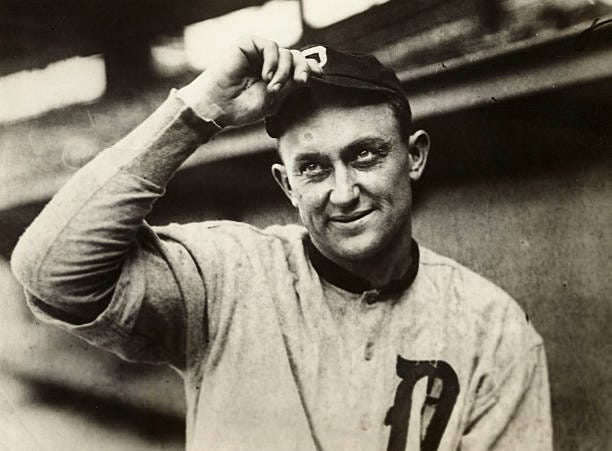
And the player they’d offered Cleveland was 20-year old Ty Cobb.