Friday Stuff
Draft Misses Edition
Monday
If you’re still sitting by the phone waiting for a call from a big league team when the draft is at round 50 or later, the baseball world is sending you a message.
That’s particularly true if you’re a college player. A high schooler might delude themselves into thinking that they only slid to round 50 or more because teams assumed they were going to college and didn’t want to waste an earlier pick. College players don’t have that delusion available to them. They don’t have anywhere else to go. Over the years, rounds 50 and later were full of such long shots that they don’t exist anymore.
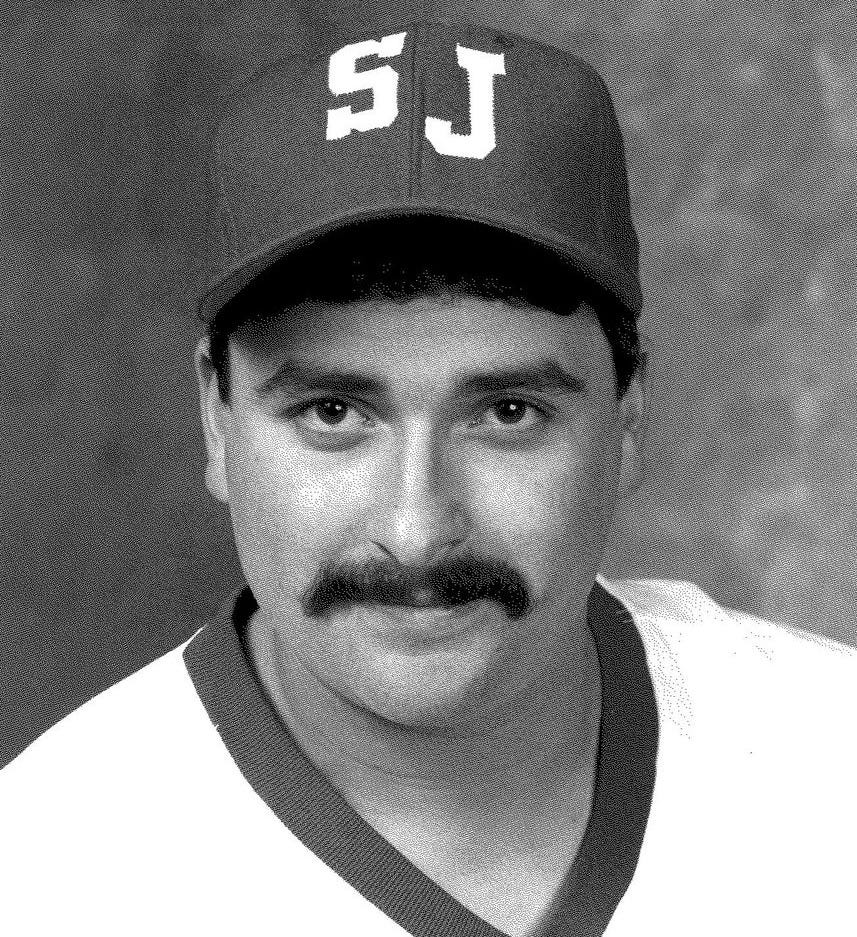
And so, on this date in in 1988, Al Bacosa didn’t have many hopes as the draft kept rolling along and his phone didn’t ring. This should not have been a surprise. He was a run-of-the-mill righty swing man on an undistinguished San Jose State team for four years. If you hunt through the school’s baseball record book, Bacosa only appears on the page listing letter-winners (he got four, from 1985 to 1988) and on the page that lists the highest walk totals in school history (he walked 65 in 1987, tied for the sixth-most in school history). He never led his own team in anything, let alone the conference, and had no accolades of any kind.
Still, he had hope, so he continued to sit by the phone, round after round, hoping it might ring. Round 50 passed, then 51, and 52, and on, and on. They were well into the part of the draft when teams simply stopped making picks, as if to say, “Yeah, we know we’ve got a pick in this round, but we’re good. Thanks anyway.” Only 15 picks were made in round 50, and that number slowly eroded the longer the draft progressed.
By round 60 just ten teams were still picking, and a lot of them weren’t very good. They were the teams hurting for talent throughout their entire organization, so they were still rolling the dice in these later rounds, hoping one of the picks would turn out to be a winner. The players being picked mostly knew where they stood. Of the ten players taken that round, only three bothered to sign. What use was it at that point? If they signed, they’d have at least 59 rookies ahead of them in their own system. The odds of clawing over all of them, plus everyone else already on minor league rosters, to eventually make the big leagues were astronomically low. Better to just move on with their lives outside of baseball.
But then round 62 began, and suddenly Al Bacosa’s phone rang. His sister answered it, then handed the phone to their father when they asked for Paul Bacosa. (Al’s full name is Paul Alan Bacosa, and goes by Al to avoid confusion with his father.) That’s when the Atlanta Braves let him know he’d been drafted with the first pick of the 62nd round. Al’s dad had a good sense of humor about it, telling them “That’s cool, but I haven’t thrown a ball in 20 years.” Then he handed the phone to Al. He was elated to find out that were offering him $3,500 to sign, plus a $575 monthly salary and an apartment lease in Idaho Falls, where the Braves’ affiliate in the Pioneer League was located. He knew his odds of making it as a pro were pretty slim, but he signed on anyway.
There’s no happy baseball ending for Al Bacosa, at least not as a professional. He pitched one season in Idaho Falls, appearing in 21 games in relief. He had a great strikeout rate, whiffing 49 hitters in only 39.1 innings, and didn’t really walk many batters either. He had a respectable 5-2 record and six saves, and though his ERA looks unremarkable at 4.35, that was actually pretty good for that league, where the league-wide ERA was 4.77. He was asked to come back to Spring Training the following year.
But Bacosa decided to pass. He hadn’t lit the minors leagues on fire as a rookie, and knew the long road in front of anyone who was approaching 23 years old and hadn’t pitched above rookie ball. He let the Braves know he was done, finished his degree at San Jose State, then went to work at the family photography studio. He and his wife still operate it to this day. Al didn’t completely abandon baseball, though. He was the pitching coach for many years at Bellarmine College Prep in San Jose, a really good program that sent several players to the big leagues, including Pat Burrell and Mark Canha. He doesn’t have a single regret about the path he chose.
But the Braves might regret picking him in that spot. One pick later, the Dodgers selected Mike Piazza.